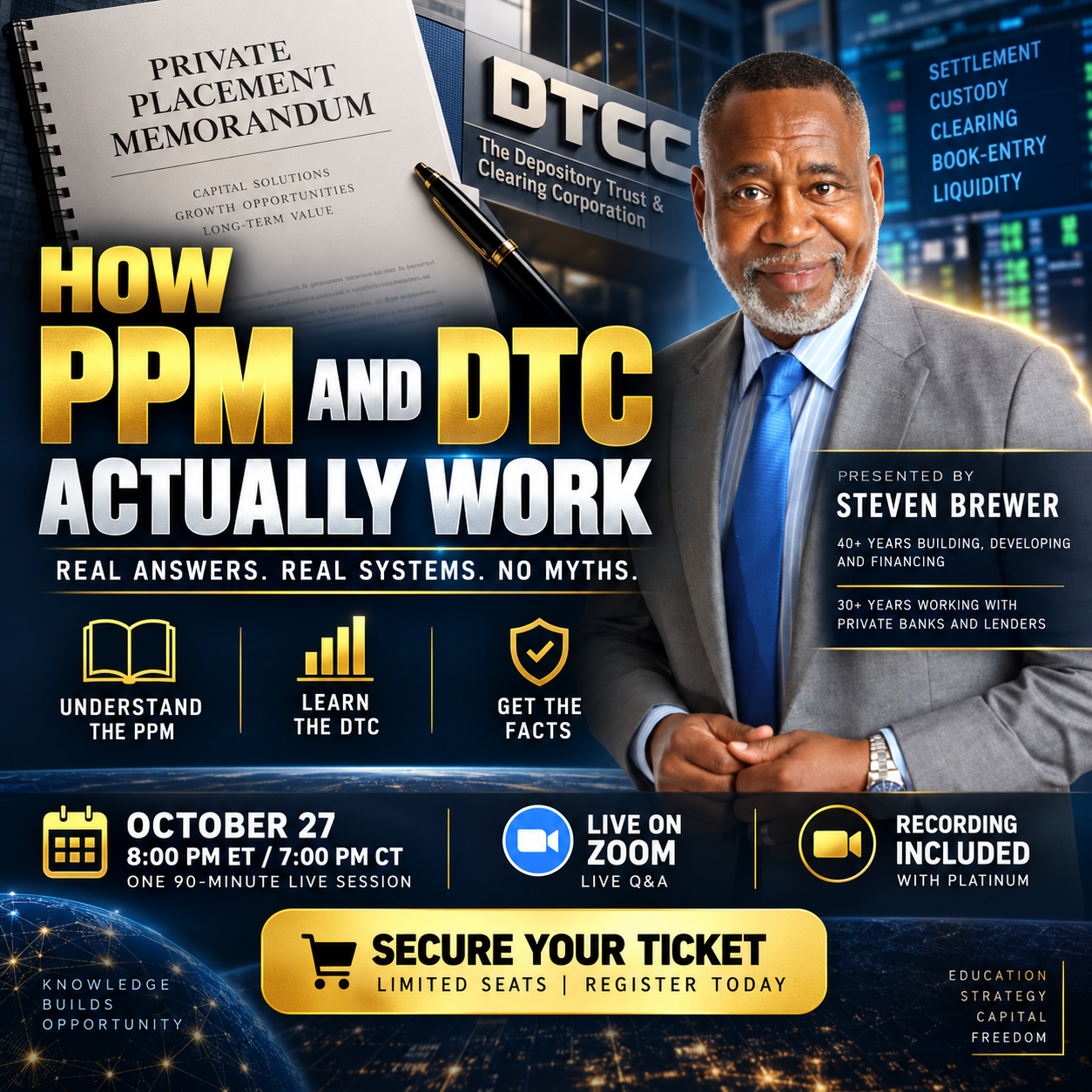
Description
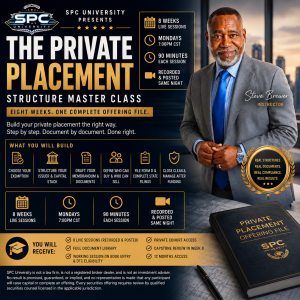
October 27 at 8:00 PM ET / 7:00 PM CT. One 90-minute live session.
Who This Session Is For?
This session teaches what the DTC actually is and how it works, and what a Private
Placement Memorandum actually is and how it is used. No myths, no shortcuts,
just the real system explained from the inside.
Founders and issuers planning a private raise under Regulation D who want to
understand what investors expect to see in a Private Placement Memorandum.
Small-cap and emerging public companies exploring how restricted securities can
become DTC eligible and what that means for liquidity and trading.
Transfer agents, brokers, and market makers who support issuers through the
deposit and eligibility process and want a clearer view of how the PPM and DTC fit
together.
Securities attorneys, accountants, and advisors who guide clients through private
placements and want a practical refresher on documentation and compliance
considerations.
Investors and fund managers evaluating private placements who want to
understand how holding form, resale restrictions, and DTC eligibility affect
liquidity.
Anyone who has been told the DTC or a PPM can be used to access funds in their
name and wants the truth about what both really do.
Secure Your Ticket. Live session. The recording is included with Platinum.
About the Presenter
40+ Years building, developing, and financing.
30+ Years working with private banks and lenders.
90 Minutes live, with teaching and real-time questions in the same session.
Session Agenda
Three modules covering what a PPM is and how it is used, what the DTC is and
how it actually works, and the path from restricted securities to DTC eligibility.
Module 01. Private Placements and the PPM
Learning objectives. By the end of this module, attendees will be able to:
Explain why issuers choose private placements over registered offerings.
Distinguish between Rule 506(b) and Rule 506(c) of Regulation D.
Identify the core sections of a Private Placement Memorandum and what each is
for.
Topics covered
Why private placements: speed, lower cost, flexibility, and fewer disclosure
burdens than a registered public offering.
Regulation D essentials: Rule 506(b) versus Rule 506(c), accredited investor
verification under 506(c), general solicitation rules, the Form D notice filing, and
state blue sky notice filings.
Anatomy of a PPM: business overview and strategy, offering terms (security type,
price, minimum investment), use of proceeds, management and key personnel,
financial information, risk factors, conflicts of interest, transfer restrictions, and
subscription procedures.
Liability and anti-fraud: why Rule 10b-5 still applies to exempt offerings and why
vague or overly optimistic disclosure is risky.
Common drafting mistakes: incomplete risk factors, unsupported projections, and
inaccurate statements about liquidity.
Key takeaways
A PPM is both a marketing-adjacent document and a legal shield, so accuracy
matters more than persuasion.
Exempt does not mean unregulated.
Activity. Attendees review a short sample use of proceeds paragraph and flag what
is vague, unsupported, or potentially misleading.
Module 02. Understanding DTC and How Securities Are Held
Learning objectives. By the end of this module, attendees will be able to:
Describe the role of The Depository Trust Company within DTCC.
Explain book-entry ownership and what street name means.
Compare DTC-held securities with certificated and direct registration securities.
Topics covered
What DTC is: a U.S. central securities depository and subsidiary of The Depository
Trust and Clearing Corporation, supporting clearing and settlement for equities,
corporate and municipal bonds, and money market instruments.
Immobilization and book-entry: why electronic records replaced physical
certificates
Reviews
There are no reviews yet.