Is there a Secret Treasury Direct Account I can get access to?

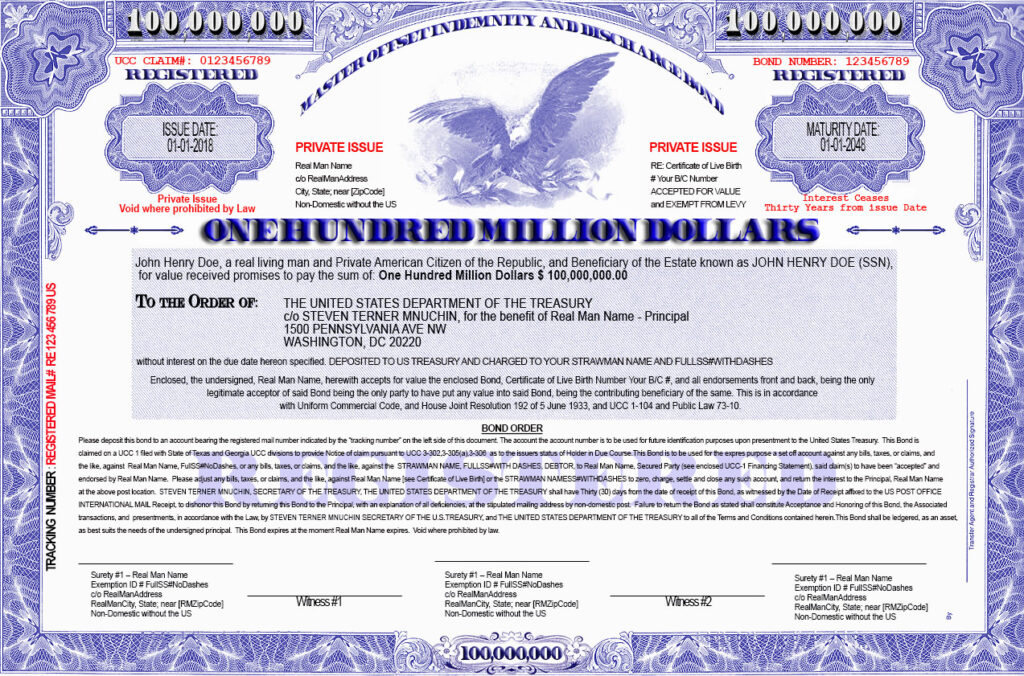
For years, various individuals have persistently claimed the existence of a “secret Treasury account” in your name—an account you could supposedly access if only you uncovered the elusive information needed to unlock it. This narrative often references a “Secret Treasury Direct Account” linked to your identity.
While there may be some empirical evidence that lends a degree of plausibility to this theory—enough to support further inquiry—there is no verified proof or official acknowledgment confirming the existence or accessibility of such an account in the manner often described.
More importantly, the original purpose of the Private American Citizen was never to petition public servants for access to accounts within the Federal Reserve banking system. That system operates under the doctrine of fractional reserve lending, issuing fiat currency that is not backed by tangible assets but rather collateralized by the future labor of U.S. citizens—a commercial agreement evidenced by the individual’s signature on financial instruments.
In short: There is no real money in circulation—only debt-based instruments.
The concept of becoming a Secured Party/Creditor is not about accessing a hidden government account. It is about understanding private banking principles, where you create value through your signature and recognize how the government monetizes your commercial energy. You are the source of the value.
The “account” you are seeking is not a traditional bank account, but the bond you issue and transmit to the U.S. Department of the Treasury. Once received, the Treasury acts as the Holder, while you remain the Holder in Due Course under UCC §§ 3-302—a critical distinction in commercial law.
The account number often referenced is the Registered Mail number—the tracking number appearing on the PS Form 3811 (Green Card)—used to identify and evidence the transaction.
To fully comprehend this process, one must understand the difference between:
- Holder vs. Holder in Due Course, and
- The underlying principles of trust law and contract law.
Ultimately, you are the banker, and you are the money. Control and value originate from your proper use of commercial instruments—not from chasing illusions of access to federal accounts.

