
By Yusef El
The terms democracy and republic are often used interchangeably today, but in truth they describe two very different systems of governance. The distinction is more than just semantic—it determines whether the people live under the shifting passions of the majority or under the steady rule of law.
The Nature of Democracy
In its simplest form, a democracy is government by the majority. Citizens vote directly on laws and policy decisions, and the will of 51% binds the other 49%. At first glance, this may seem fair and participatory. However, as the document Citizenship TM 2000-25 notes, democracies are historically unstable because they operate on the passions and prejudices of the majority rather than on fixed principles of law .
The Founding Fathers were deeply skeptical of pure democracy. James Madison, writing in Federalist No. 10, warned that democracies “have ever been spectacles of turbulence and contention” and are prone to sacrificing the rights of the minority to the passions of the majority. In a democracy, rights are not secure because they can be voted away whenever public opinion shifts.
The Nature of a Republic
A republic, by contrast, is rooted in the rule of law. Authority flows from the people, but power is exercised through representatives bound by a constitution. The central idea of a republic is that inalienable rights are secured against the will of the majority.
As TM 2000-25 Citizenship explains, a republic is a system where sovereignty resides with the people, but government is strictly limited to protecting life, liberty, and property . In a republic, elected officials are trustees—not rulers—bound by the higher law of the Constitution.
The word republic itself comes from the Latin res publica, meaning “the public thing” or “the commonwealth.” It reflects the principle that government exists to serve the people as a whole, not to act as a vehicle for majority factions or special interests.
Key Differences
| Democracy | Republic |
|---|---|
| Majority rules; 51% can bind 49%. | Governed by law; rights are protected regardless of majority opinion. |
| Laws may shift with popular passions. | Laws are restrained by a constitution. |
| Rights are privileges granted or revoked by vote. | Rights are inherent and inalienable. |
| Historically unstable; leads to factionalism. | More stable; based on principles rather than whims. |
Why the Distinction Matters
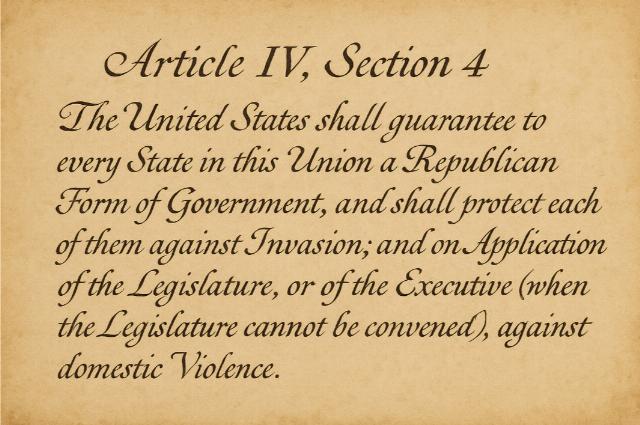
The U.S. Constitution guarantees “a Republican Form of Government” (Article IV, Section 4), not a democracy. The Founders deliberately rejected democracy because they understood it would erode individual rights and invite tyranny. As Benjamin Franklin is famously quoted, America was founded as “a Republic—if you can keep it.”
Modern discourse often praises “spreading democracy,” but as the document you provided emphasizes, democracy is not the American ideal. The ideal is constitutional republicanism, where liberty is protected from both kings and mobs.
Democracy vs. Republic: Why the Distinction Matters
Today, the words democracy and republic are often treated as if they mean the same thing. Politicians frequently describe the United States as a democracy, and media outlets reinforce the idea that majority rule defines freedom. Yet the Framers of the Constitution—and even the Supreme Court—have consistently drawn a clear line between these two forms of government.
The distinction is not academic. It determines whether liberty is grounded in enduring principles of law or subjected to the ever-changing passions of the crowd.
Democracy: Majority Rule Without Restraint
A democracy is government by direct majority vote. Citizens decide policy, law, and direction by simple numerical superiority. On the surface, this looks like fairness—everyone gets a voice, and the majority prevails. But the problem is exactly that: the majority can impose its will on the minority without restraint.
James Madison, in Federalist No. 10, wrote:
“Democracies have ever been spectacles of turbulence and contention; have ever been found incompatible with personal security or the rights of property; and have in general been as short in their lives as they have been violent in their deaths.”
This vulnerability is why the Founders deliberately avoided creating a pure democracy. Democracies are inherently unstable, vulnerable to factionalism, and historically descend into either chaos or tyranny.
Republic: Government of Law, Not of Men
A republic, by contrast, is a system where the people are sovereign but government is bound by a higher law. In a republic, elected officials serve as trustees, not rulers, and their powers are limited by a written constitution.
The U.S. Constitution explicitly guarantees in Article IV, Section 4:
“The United States shall guarantee to every State in this Union a Republican Form of Government…”
This reflects the Founders’ intent to secure inalienable rights that no majority could vote away. As the Supreme Court affirmed in Yick Wo v. Hopkins (118 U.S. 356, 1886):
“Sovereignty itself is, of course, not subject to law, for it is the author and source of law; but in our system, while sovereign powers are delegated to the agencies of government, sovereignty itself remains with the people, by whom and for whom all government exists and acts. And the law is the definition and limitation of power.”
In other words, the United States is a republic precisely because the people retain ultimate sovereignty, and the law—not the will of a temporary majority—defines the boundaries of governmental authority.
Supreme Court on the Republic
The Court has consistently reaffirmed this principle:
- Marbury v. Madison (5 U.S. 137, 1803): Chief Justice Marshall established the principle of judicial review, underscoring that the Constitution is supreme law, not the will of shifting political factions.
- Minor v. Happersett (88 U.S. 162, 1875): The Court confirmed that rights do not flow from government, but exist independently of it.
- Luther v. Borden (48 U.S. 1, 1849): The Court emphasized that it is the duty of the federal government to guarantee each state a republican form of government—not a democracy.
- Yick Wo v. Hopkins (118 U.S. 356, 1886): As cited above, the Court explained that law is the definition and limitation of power, and that arbitrary rule has no place in a republic.
Together, these decisions highlight the Supreme Court’s consistent recognition of the U.S. as a constitutional republic.
Why the Distinction Matters
When Benjamin Franklin was asked what form of government the delegates had created, he famously replied: “A Republic—if you can keep it.”
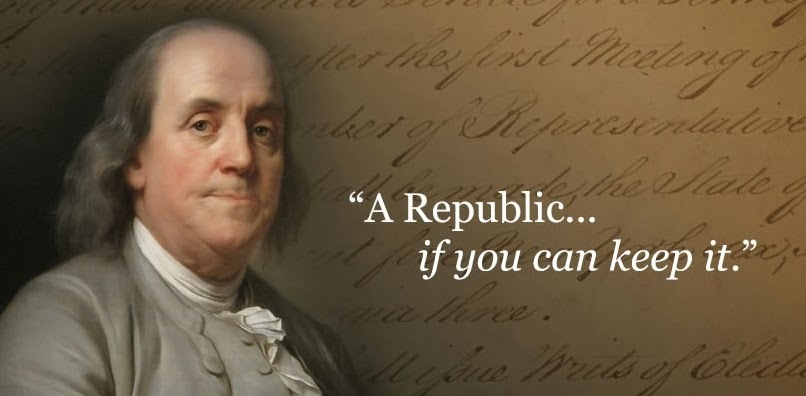
That warning remains urgent today. Calling America a “democracy” is not only historically inaccurate but dangerous, because it conditions citizens to accept majority rule as the highest law. In truth, America was founded as a constitutional republic, designed to secure liberty even when unpopular and to shield individuals from the tyranny of both kings and mobs.
Conclusion
Understanding the difference between a democracy and a republic is essential to preserving freedom. A democracy rests on majority opinion; a republic rests on law and principle. The former can become tyranny of the majority, while the latter safeguards the natural rights of every individual.
In short:
- Democracy = rule of men by majority.
- Republic = rule of law protecting liberty.
The United States was built as a republic for a reason—and whether that republic endures depends on whether the people recognize and defend the distinction.
The difference between a democracy and a republic is the difference between fleeting opinion and enduring liberty. A democracy is the rule of men; a republic is the rule of law.
The United States was founded as a republic for a reason—because the Founders understood that true freedom is preserved not when the majority rules, but when the law protects every individual’s rights.
By Yusef El