What Is Form 56 For?

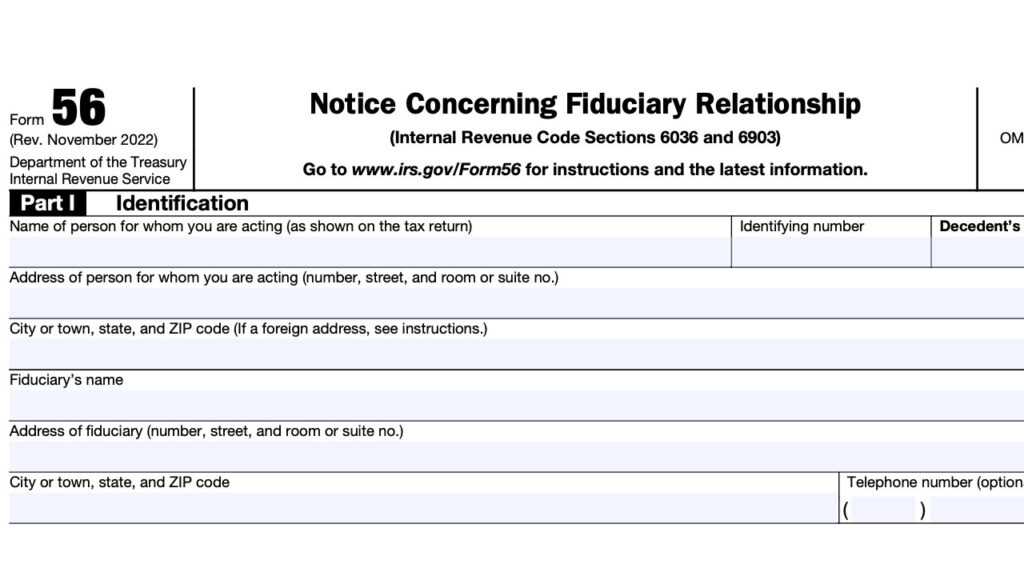
Form 56 is used to:
- Establish a fiduciary relationship with the IRS.
- Notify the IRS that someone is acting in a fiduciary capacity for another person or entity.
- Terminate a fiduciary relationship once the role is completed.
This form gives the IRS formal notice that someone is taking responsibility for handling another’s tax matters, including receiving mail, filing returns, and interacting on behalf of that person or estate.
state.
✅ Is It Lawful for a Private Citizen to Use Form 56?
Yes.
A private citizen may lawfully use Form 56—but only if they are acting in a lawful fiduciary role. It is not limited to attorneys or accountants.
Examples of valid use cases by private citizens:
- Acting as executor for a deceased family member’s estate.
- Acting as trustee for a private or family trust.
- Serving as guardian or conservator for an incapacitated person.
- Serving as the Secured Party or authorized representative for an estate or legal person (e.g., the “strawman”) in certain commercial law processes, provided such status is properly documented.
⚠️ Important Caveats:
While Form 56 is a lawful form, its misuse or improper filing could be interpreted as a frivolous filing or a fraudulent attempt to interfere with the administration of tax laws—particularly if the person is:
- Claiming nonexistent fiduciary powers
- Attempting to obstruct IRS collection without proper legal authority
- Using the form in a deceptive or misunderstood commercial redemption theory
That said, properly executed, Form 56 has been used by those asserting a secured party creditor relationship or private trust control, but it must be backed by:
- A valid security agreement or trust indenture
- Proof of fiduciary appointment
- A proper paper trail (e.g., UCC filings, affidavits of trust)
🧠 In Sovereign/Private Law Circles:
Many individuals use Form 56 to:
- Declare a fiduciary interest in the Estate (ALL CAPS NAME)
- Notify the IRS that the living man/woman is now acting as the administrator/trustee over the artificial legal person
- Redirect tax correspondence or obligations away from the Strawman toward a private fiduciary handling matters under a trust or SPC structure
This usage is not inherently unlawful—but again, it must be truthfully and competently supported by proper legal status and documentation.
📌 Summary
Purpose/Details
Function
Notifies IRS of fiduciary relationship (e.g., trustee, executor)
Lawfulness
Yes, lawful when used honestly and supported by a valid role
Private Citizen Use
Yes, if acting in bona fide fiduciary capacity
Used in SPC Context?
Yes, often to claim fiduciary standing over legal estate
Risks
Misuse can result in IRS scrutiny or legal consequences if filed frivolously or fraudulently
🔐 Using Form 56 in the UCC/SPC Process: Step-by-Step Guide
✅ Purpose of This Filing
To officially notify the IRS (and other agencies by copy) that:
- You, the living man or woman, are acting as fiduciary (trustee, executor, or administrator) over the artificial legal person (YOUR NAME IN ALL CAPS),
- You have established a private trust or secured party relationship via UCC filings and security agreement,
- All related liabilities, assets, and correspondence should be redirected to you as fiduciary, not to the estate itself.
🧾 STEP 1 – Prepare Supporting Documents
Before submitting Form 56, prepare or have the following in order:
- Security Agreement between YOU (living person) and the Debtor (ALL CAPS NAME).
- UCC-1 Financing Statement, naming YOU as the Secured Party and the DEBTOR as the Debtor.
- (Optional but Recommended) Declaration of Trust or Affidavit of Fiduciary Status.
- Cover Letter explaining your fiduciary appointment and administrative purpose (for IRS records).
- Affidavit of Mailing and Certificate of Service to preserve the chain of custody.
📝 STEP 2 – Fill Out Form 56
Use the Form 56 Template you downloaded. Here’s how:
- Line 1a: YOUR NAME IN ALL CAPS (the legal estate / entity)
- Line 1b: SSN or EIN of the estate (format: 123-45-6789)
- Line 2a: Last known address of the Strawman (IRS record)
- Line 2b: Your c/o private address (non-domestic if applicable)
- Line 3: Your full natural name (Living Man/Woman)
- Line 6: Check appropriate box (usually “Other” + explanation)
- Line 7: Date your fiduciary relationship began (often matches your UCC filing date)
Sign it with your wet ink signature:
“John Doe, Administrator/Executor for JOHN DOE, Estate”
All Rights Reserved – Without Prejudice – UCC 1-308
📬 STEP 3 – Mail to IRS (and Optional Agencies)
Mail your Form 56 package to:
IRS – Internal Revenue Service
Ogden, UT 84201 (or your nearest IRS processing center)
Include:
- Signed Form 56 (original)
- Cover letter
- Copy of UCC-1 and Security Agreement
- Copy of any trust documents or appointment affidavits
Mail via:
- Certified Mail with Return Receipt Requested (green card)
- Or via Notarial Presentment for higher-level administrative notice
📁 STEP 4 – Record Your Filing
Create and retain your Administrative Record, including:
- Copy of everything mailed
- Proof of mailing (Certified Mail Receipt or Notarial Certificate of Mailing)
- Affidavit of Service
- Copy of return receipt when received back
Optionally, file your Form 56 with:
- Your state Secretary of State (as part of your public record)
- County Recorder (to perfect the notice into public record)
⚖️ STEP 5 – Use Form 56 in Further Administrative Actions
You can now attach or reference your Form 56 in:
- IRS correspondence
- Presentments to courts, debt collectors, or agencies
- Trust enforcement notices
- Property title documents (as Executor or Trustee)
- Administrative discharge processes
Language sample:
“Please be advised that I, [Your Name], am acting in fiduciary capacity as per IRS Form 56 filed on [Date], under secured interest perfected by UCC-1 No. [#]. All communications and obligations are to be directed to the undersigned as trustee for the legal estate.”
📌 Additional Tips:
Action/Benefit
Unifies the private estate administrationn.
File with SSA or Treasury
Optional notice to other agencies of fiduciary control
Reference in court as Exhibit
Strengthens standing as Executor or Administrator
Add to trust or estate file
📌 Summary
| Purpose | Details |
|---|---|
| Function | Notifies IRS of fiduciary relationship (e.g., trustee, executor) |
| Lawfulness | Yes, lawful when used honestly and supported by a valid role |
| Private Citizen Use | Yes, if acting in bona fide fiduciary capacity |
| Used in SPC Context? | Yes, often to claim fiduciary standing over legal estate |
| Risks | Misuse can result in IRS scrutiny or legal consequences if filed frivolously or fraudulently |
